- Teacher: Akash Bhattacharjee
- Teacher: Purbasha Bose
- Teacher: Tapas Das
- Teacher: Shravani Mondal
- Teacher: S Paul
TINT-CSE Online Course Portal
-
Feedback Forms
Available courses
- Teacher: Swati Banik
- Teacher: Sandipan Ghosal
TINT - All Feedbacks
- Teacher: Arghya Kusum Das
- Teacher: Sandipan Ghosal
- Teacher: Chinmoy Kar
- Teacher: Pratima Sarkar
- Teacher: Sumanta Chakraborty
- Teacher: Tirthankar Ghosh
- Teacher: Paromita Kundu
- Teacher: Abhisek Roy
- Teacher: Sumanta Chakraborty
- Teacher: Tirthankar Ghosh
- Teacher: Paromita Kundu
- Teacher: Abhisek Roy
- Teacher: Sayantika Bose Chakraborty
- Teacher: Anwesha Dutta Ain
- Teacher: Sandipan Ghosal
- Teacher: Kashmi Mondol
- Teacher: S Paul
- Teacher: Tinku Adhikari
- Teacher: Sandipan Ghosal
- Teacher: Vivekananda Mukherjee
- Teacher: Sanjib Roy
- Teacher: Nilanjana Adhikari
- Teacher: Kallol Bhattacharya
- Teacher: Ashoktaru Chatterjee
- Teacher: Debraj Chatterjee
- Teacher: Tanusree Chatterjee
- Teacher: Sajib Chowdhury
- Teacher: Arghya Kusum Das
- Teacher: Nabanita Das
- Teacher: Sayantani De
- Teacher: Sandipan Ghosal
- Teacher: Malancha Khan
- Teacher: Kaushik Majumdar
- Teacher: Rupa Mitra
- Teacher: Somenath Mukherjee
- Teacher: Shiladitya Munshi
- Teacher: S Paul
- Teacher: Sanjib Roy
- Teacher: Bikash Sadhukhan
- Teacher: Amal Saha
- Teacher: Ayan Chakraborty
- Teacher: Sandipan Ghosal
- Teacher: Kaushik Majumdar
- Teacher: Shiladitya Munshi
- Teacher: S Paul
- Teacher: Amal Saha
- Teacher: Soumen Santra
- Teacher: Sandipan Ghosal
- Teacher: S Paul
- Teacher: Hrishita Barman
- Teacher: Arindam Roy Goswami
- Teacher: Prof.Saikat Nath
- Teacher: Prof.Birendra Krishna Ghosh
- Teacher: Prof.Rajat Kumar Mandal
- Teacher: Prof.Milan Basu
- Teacher: Prof.Syamasree Biswas Raha
- Teacher: Prof.Milan Basu
- Teacher: Prof.Dipanwita Ganguly
- Teacher: Prof.Swarnali Jhampati
- Teacher: Prof.Syamasree Biswas Raha
- Teacher: Prof.Dipanwita Ganguly
- Teacher: Prof.Swarnali Jhampati
- Teacher: Prof.Debasish Biswas
- Teacher: Prof.Monalisa Datta
- Teacher: Prof.Rajat Kumar Mandal
- Teacher: Papiya Debnath
- Teacher: Barnima Ghosal
- Teacher: Kakali Ghosh
- Teacher: Sayantan Majumder
- Teacher: Barnima Ghosal
- Teacher: Dibyendu Nath
- Teacher: Arindam Roy Goswami
- Teacher: Tinku Adhikari
- Teacher: Sanjukta Bhattacharya
- Teacher: Nilanjan Dey
- Teacher: Antara Ghosh
This course, using both lecture and laboratory practice , introduces students to basic computer programing with C as a general-purpose language.
Course Objectives:
To understand the various steps in program development.
To learn the syntax and semantics of C programming language.
To learn the usage of structured programming approach in solving problems.
Course Outcomes:
The student will learn
To understand the various steps in program development.
To formulate simple algorithms for arithmetic and logical problems.
To translate the algorithms to programs (in C language) to solve basic problems by understanding basic concepts in C like operators, control statements, conditional branching and iteration etc.
To learn the usage of structured programming approach in solving problems.
To decompose a problem into functions and synthesize a complete program using divide and conquer approach.
To create, read from and write to text and binary files
Course Objectives:
To understand the various steps in program development.
To learn the syntax and semantics of C programming language.
To learn the usage of structured programming approach in solving problems.
Course Outcomes:
The student will learn
To understand the various steps in program development.
To formulate simple algorithms for arithmetic and logical problems.
To translate the algorithms to programs (in C language) to solve basic problems by understanding basic concepts in C like operators, control statements, conditional branching and iteration etc.
To learn the usage of structured programming approach in solving problems.
To decompose a problem into functions and synthesize a complete program using divide and conquer approach.
To create, read from and write to text and binary files
- Teacher: Tinku Adhikari
- Teacher: Antara Ghosh
- Teacher: Sourav Mahapatra
- Teacher: Ananjan Maiti
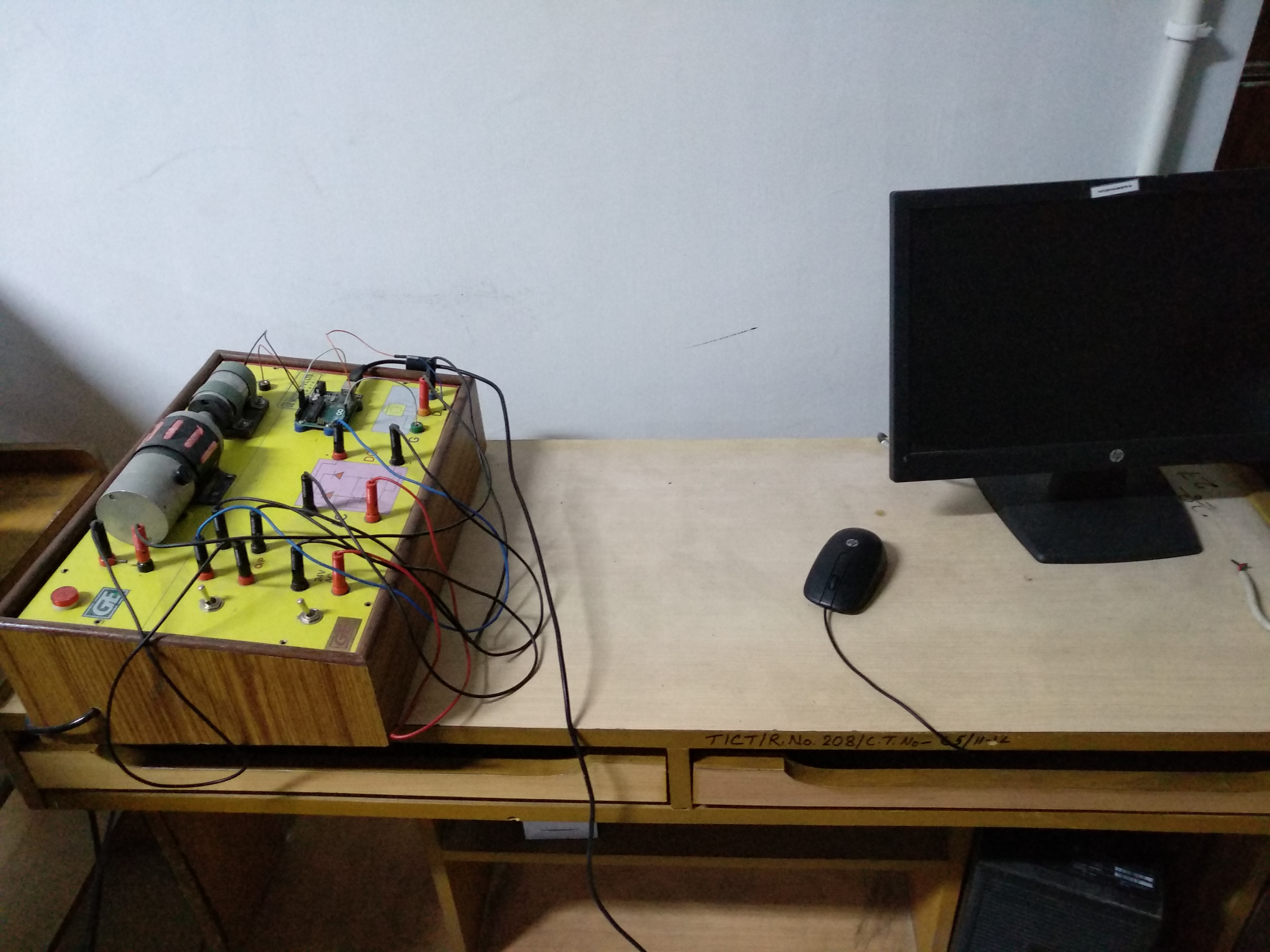
Course Objective
Study and simulation of real life control problems using the techniques of classical control.Course Outcome
1. Recognize and distinguish different real life control problems, their different components and operations2. Determine mathematical model of physical system in time and frequency domain3. Implement and demonstrate the methods of classical control to analysis the control problems from mathematical models4. Resolve the control problems to adapt the requirement of the physical system
5. Experimenting and simulating the real life control system on the basis of classical control theory
6. Planning to setup a physical system to perform a specific task
- Teacher: Prof.Debasish Biswas
- Teacher: Prof.Satabdi Chatterjee
- Teacher: Prof.Ayindrila Roy
- Teacher: Prof.Debasish Biswas
- Teacher: Prof.Satabdi Chatterjee
- Teacher: Prof.Ayindrila Roy

- Teacher: Prof.Syamasree Biswas Raha
- Teacher: Prof.Saikat Nath
- Teacher: Prof.Debasish Biswas
- Teacher: Prof.Sushma Verma
- Teacher: Prof.Monalisa Das
- Teacher: Prof.Swarnali Jhampati
- Teacher: Prof.Debarchita Mishra
- Teacher: Prof.Debaparna Sengupta
- Teacher: Prof.Monalisa Das
- Teacher: Prof.Monalisa Datta
- Teacher: Prof.Rajat Kumar Mandal
- Teacher: Prof.Ayindrila Roy
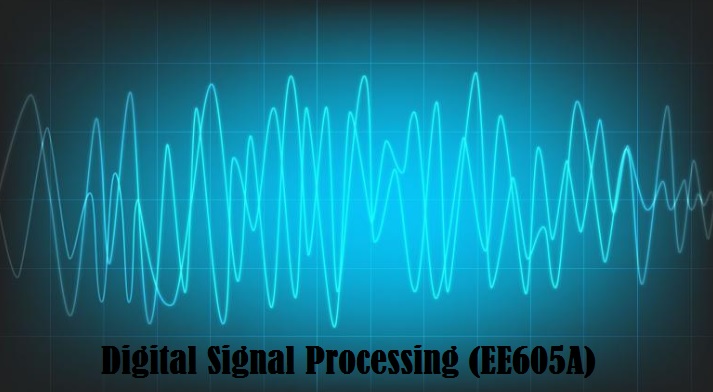
Digital signal processing (DSP) is the use of digital processing, such as by computers or more specialised digital signal processors, to perform a wide variety of signal processing operations. The digital signals processed in this manner are a sequence of numbers that represent samples of a continuous variable in a domain such as time, space, or frequency.
- Teacher: Prof.Mainak Biswas
- Teacher: Prof.Birendra Krishna Ghosh
- Teacher: Prof.Rajat Kumar Mandal
- Teacher: Prof.Ayindrila Roy
- Teacher: Prof.Arabindo Chandra
- Teacher: Prof.Dipanwita Ganguly
- Teacher: Prof.Swarnali Jhampati
Course Objective:
To study, analyze and simulate the performance of a power system network under steady and transient state.
Course Outcomes (COs):
After completion of this course the students will be able to:
- Represent the power system components in per unit (PU) form by the
impedance or reactance diagram.
2. Describe the distribution substation, the operations of different relays and circuit breakers.3. Determine load flow studies and simulate the power network by different load flow methods considering economic load dispatch.
4. Calculate symmetrical fault and unsymmetrical faults by symmetricalcomponents study
5. Investigate different protection schemes of power system components and power system stability for steady state and transient conditions.
- Teacher: Prof.Syamasree Biswas Raha
- Teacher: Prof.Saikat Nath
- Teacher: Prof.Sushma Verma
Skip courses